
Reference Range vs Optimal Range: Why “Normal” Reports Don’t Mean Healthy
Blog post description.
BLOOD KUNDALI
Manasi Kurlekar
1/21/20261 min read
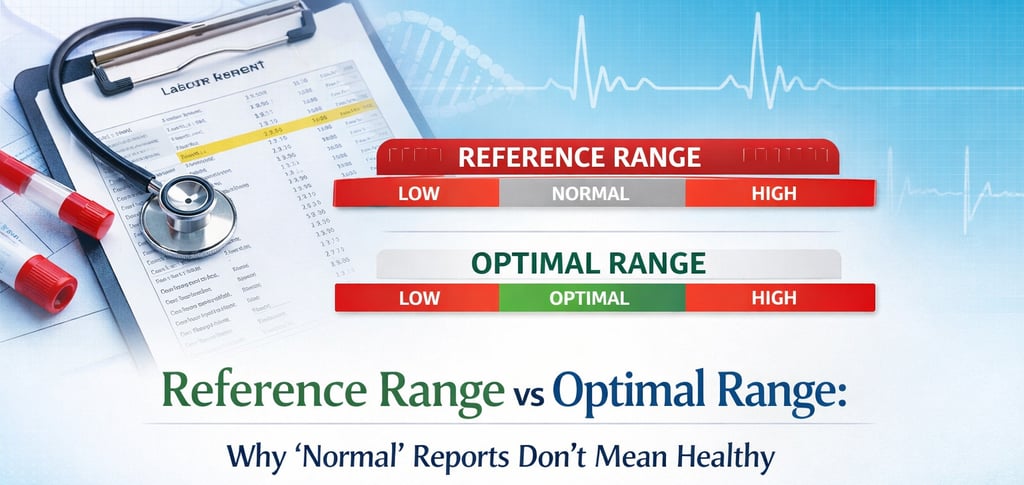
Reference Range vs Optimal Range: Why “Normal” Reports Don’t Mean Healthy
Have you ever been told, “Your reports are normal,” yet your body feels anything but normal?
Fatigue, bloating, hair fall, brain fog, anxiety, weight gain, irregular periods—these symptoms often exist years before a diagnosis, even when blood reports sit comfortably within the reference range.
This is where the gap between reference range and optimal range becomes important.
What Is a Reference Range?
A reference range is a statistical average, created by testing a large population—including people who may already have early-stage imbalances.
In simple words:
👉 Reference range tells us what is common, not what is ideal.
So when your doctor says, “It’s within range,” it only means:
You don’t meet diagnostic criteria
You don’t need medication yet
But your body may already be struggling.
What Is an Optimal Range?
Optimal range looks at:
How well your body is functioning
Whether nutrients, hormones, and systems are working efficiently
Early imbalances before disease develops
Functional Nutrition focuses on optimal ranges, not just survival ranges.
Example:
Vitamin D at 30 may be “normal”
But optimal function often needs higher levels for immunity, hormones, and energy
Why Symptoms Appear Despite Normal Reports
Your body always whispers before it screams.
Symptoms are early warning signals:
Low energy → cellular or nutrient stress
Cravings → blood sugar or mineral imbalance
Poor sleep → nervous system overload
Digestive issues → gut–immune imbalance
Conventional medicine treats disease.
Functional Nutrition supports function.
Where Functional Nutrition Fits In
Functional Nutrition bridges the gap between:
“Nothing is wrong”
and “Now you have a diagnosis”
It uses:
Food as foundational support
Targeted supplements where deficiencies exist
Lifestyle inputs to reduce system overload
Food is not the main line of treatment during illness—but it supports healing.
Once balance is restored, food and nutrition help maintain health long-term.
The Takeaway
Normal reports do not always mean optimal health.
Listening to symptoms early can prevent bigger issues later.
This blog series on Paripurna Life will help you understand:
Your reports beyond numbers
Your symptoms beyond labels
Your body beyond quick fixes
✨ Healing begins with awareness.
Wellness
Empowering natural healing through balanced living.
Vitality
Balance
info@paripurnalife.com
+91 9765021333
© 2025. All rights reserved.